A landlord’s guide to reviewing tenants fairly
A good tenant is more than someone who pays rent on time. They communicate when something goes wrong, respect the terms of the lease, and leave the property in…
A good tenant is more than someone who pays rent on time. They communicate when something goes wrong, respect the terms of the lease, and leave the property in reasonable condition. But when a tenancy ends, most landlords have no structured way to record that experience for the next property owner.
The result is a rental market where important information gets lost between tenancies, and every new landlord starts the screening process from scratch.
A fair, detailed tenant review can change that.
Focus on conduct, not personal impressions
A tenant review should describe what happened during the tenancy, not whether you personally liked the person renting your property.
Keep your assessment tied to observable behaviour:
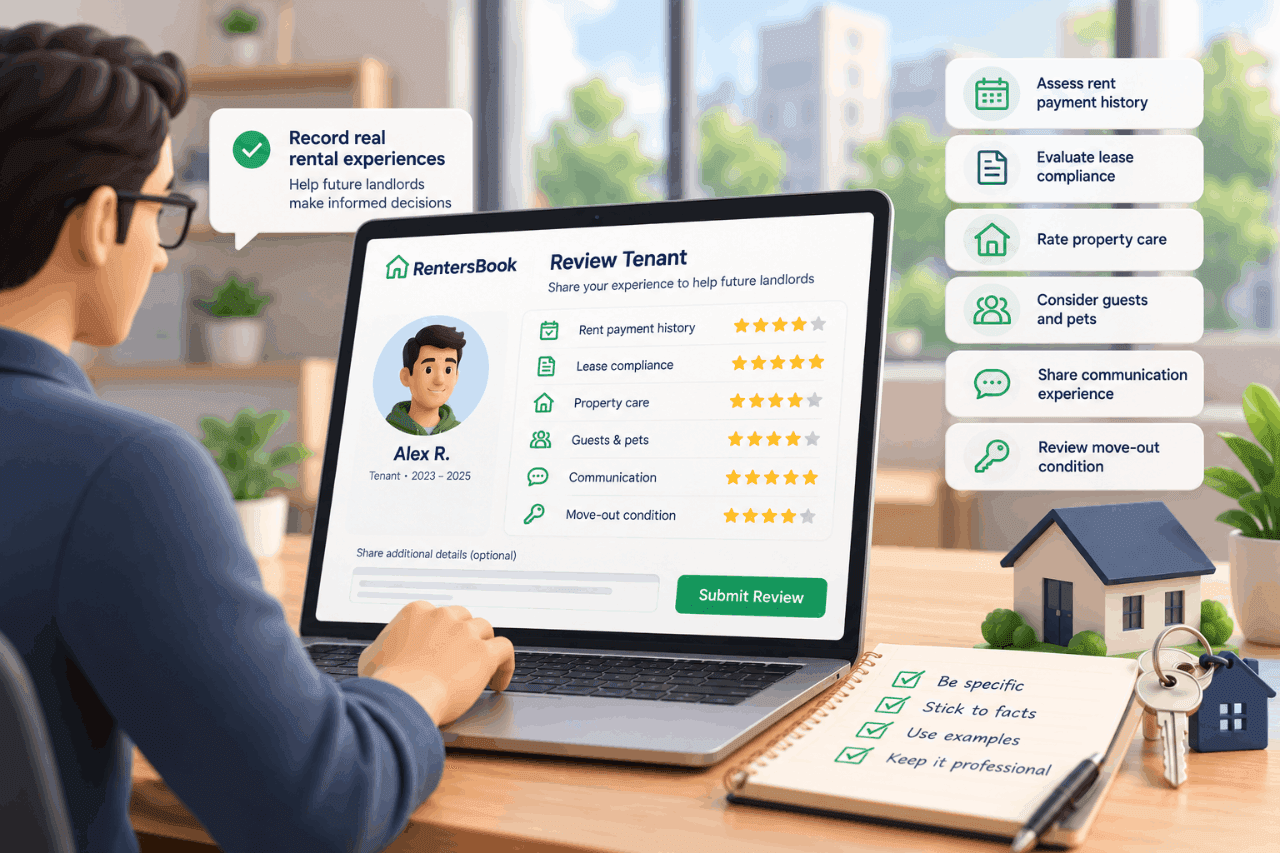
Rent payment history: Were payments made on time? If there were delays, were they communicated and resolved?
Lease compliance: Did the tenant follow the agreed terms and property rules?
Property care: Was the unit maintained reasonably, considering normal wear and tear?
Guests and pets: Were the agreed policies followed?
Communication: Did the tenant report problems, respond to necessary messages, and work constructively toward solutions?
Move-out condition: Was the property returned in a condition consistent with the lease and the documented move-in state?
Specific examples make a review more useful than broad statements such as “excellent tenant” or “difficult to deal with.”
Separate facts from frustration
Not every difficult tenancy reflects poor tenant conduct. A disagreement over a repair, a disputed deposit deduction, or a complaint about maintenance does not automatically make someone a bad tenant.
Before submitting a review, ask yourself three questions:
Can I support this claim? Use payment records, inspection reports, written communication, or dated photographs where appropriate.
Is it relevant to a future tenancy? Include information that helps another landlord understand the rental relationship, rather than unrelated personal details.
Would I apply the same standard to every tenant? Consistent criteria reduce the risk of reviews becoming personal or unfair.
A review should reflect the tenancy accurately, even when the relationship ended badly.
Document the tenancy before it ends
The easiest time to prepare an accurate review is while the relevant details are still accessible.
Maintain clear records of rent payments, maintenance requests, inspection findings, agreed arrangements, and move-in and move-out conditions. When a disagreement arises, document the issue and how it was resolved.
This approach benefits both parties. Landlords can support their assessments with evidence, while tenants have a clearer basis for understanding or challenging claims about their conduct.
Documentation is not about preparing for a dispute. It is about reducing the uncertainty that allows disputes to grow.
Remember that tenants review landlords, too
Rental accountability works in both directions.
Tenants also need a way to describe whether repairs were handled promptly, whether maintenance staff were responsive, how rent increases were communicated, and whether inspections were conducted appropriately.
A tenant who reports a genuine maintenance problem should not automatically receive a poor rating for raising it. Equally, a landlord should be able to document legitimate concerns about lease compliance without resorting to personal attacks.
When both sides can share their experiences, future rental decisions become better informed.
Write a review that helps the next landlord
A useful tenant review does not need to be long. It needs to be specific, balanced, and relevant.
Instead of writing, “The tenant was unreliable,” explain the documented issue, how frequently it occurred, and whether it was resolved.
Instead of writing, “The property was left in terrible condition,” describe the actual condition at move-out and refer to supporting photographs where available.
Avoid publishing private information, unnecessary personal details, or allegations you cannot substantiate. If a claim is disputed, distinguish what you observed from what you believe happened.
The goal is not to produce a perfect rating for every tenant. It is to create a reliable record that reflects real rental experiences.
Build a rental record that benefits everyone
Every completed tenancy contains information that could help the next person make a better decision. Without a structured way to preserve that information, valuable experience disappears as soon as the keys are returned.
RentersBook gives landlords and tenants a platform to review one another, with reviews connected to the specific rental relationship they describe. Property reviews remain separate from landlord reviews, helping distinguish the condition of a building from the conduct of the person managing it.
A fair review can help a responsible tenant establish a stronger rental reputation. It can also help a landlord make more informed decisions about future applications.
The best rental records are not the ones with the most five-star ratings. They are the ones that accurately describe what happened, give both sides a voice, and help the next tenancy start with better information.
Check the record before you sign.
Look up a landlord, a tenant or a property. It is free, and every review describes an actual tenancy.